

Top 3 Coffee Packaging Bag Designs That Boost Brand Sales in 2026
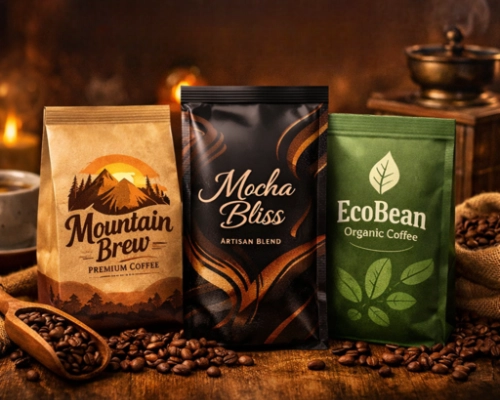
Packaging design is more crucial than ever for brand distinction and customer engagement in the fast growing global coffee market. The International Coffee Organization reports that as specialty coffee culture grows throughout North America, Europe, and Asia over the past ten years, coffee consumption has climbed consistently worldwide. Market insights from Statista also indicate that the global coffee market is projected to surpass USD 460 billion by 2030, driven by rising demand for premium and specialty coffee products.
Coffee packaging is becoming a vital tool for brand narrative, product freshness, and retail shelf presence as competition heats up. It is no longer only about safeguarding the product. Consumers of today demand packaging that conveys ease, sustainability, and quality.
Key Trends Affecting Coffee Packaging in 2026
Environmental regulations, advancements in packaging technology, and shifting customer expectations are driving the evolution of coffee packaging. Coffee roasters throughout the world are making decisions about their packaging design based on a number of significant trends.
1.Packaging Innovation Is Being Driven by Sustainability
In the coffee sector, packaging options are increasingly influenced by sustainability. Customers are favoring companies who use recyclable or compostable packaging to show their commitment to the environment.
This shift is also being accelerated by regulatory frameworks. For instance, businesses are being pressured by the EU Packaging and Packaging Waste Regulation to decrease packaging waste, improve recyclability, and give more precise material composition labeling. Coffee companies are being encouraged by these laws to investigate decreased material usage, compostable packaging solutions, and mono-material recyclable films.
Because of this, a lot of specialty coffee companies are aggressively switching to eco-friendly packaging formats that support global sustainability objectives while preserving the barrier protection needed to guarantee coffee freshness.
2.Coffee Brands Need to Have a Premium Shelf Appeal
In both retail and online settings, packaging is essential for drawing customers. When perusing store shelves, consumers frequently decide what to buy in a matter of seconds, according to studies on consumer behavior.
High-end visual and tactile package components are becoming more and more important to premium coffee brands, such as:
•Soft-touch or matte finishes
•Simple and tidy graphic designs
•Embossing and metallic embellishments
•Natural color schemes that convey sustainability
In competitive retail environments, these visual components aid coffee brands in communicating authenticity and quality while setting their goods apart.
3.Flexible Packaging is Needed for Smaller Batch Coffee
Demand for more adaptable packaging solutions has increased due to the growth of specialty coffee roasting. Specialty roasters frequently release limited-edition beans, seasonal blends, or single-origin goods, which necessitate shorter production runs and more frequent packaging modifications, in contrast to huge commercial coffee companies.
Coffee businesses are able to maintain premium package quality while producing lesser volumes thanks to flexible packaging technologies like digital printing packaging and customisable bag designs. In today's rapidly evolving specialty coffee market, both product innovation and quicker product launches are made possible by this flexibility.
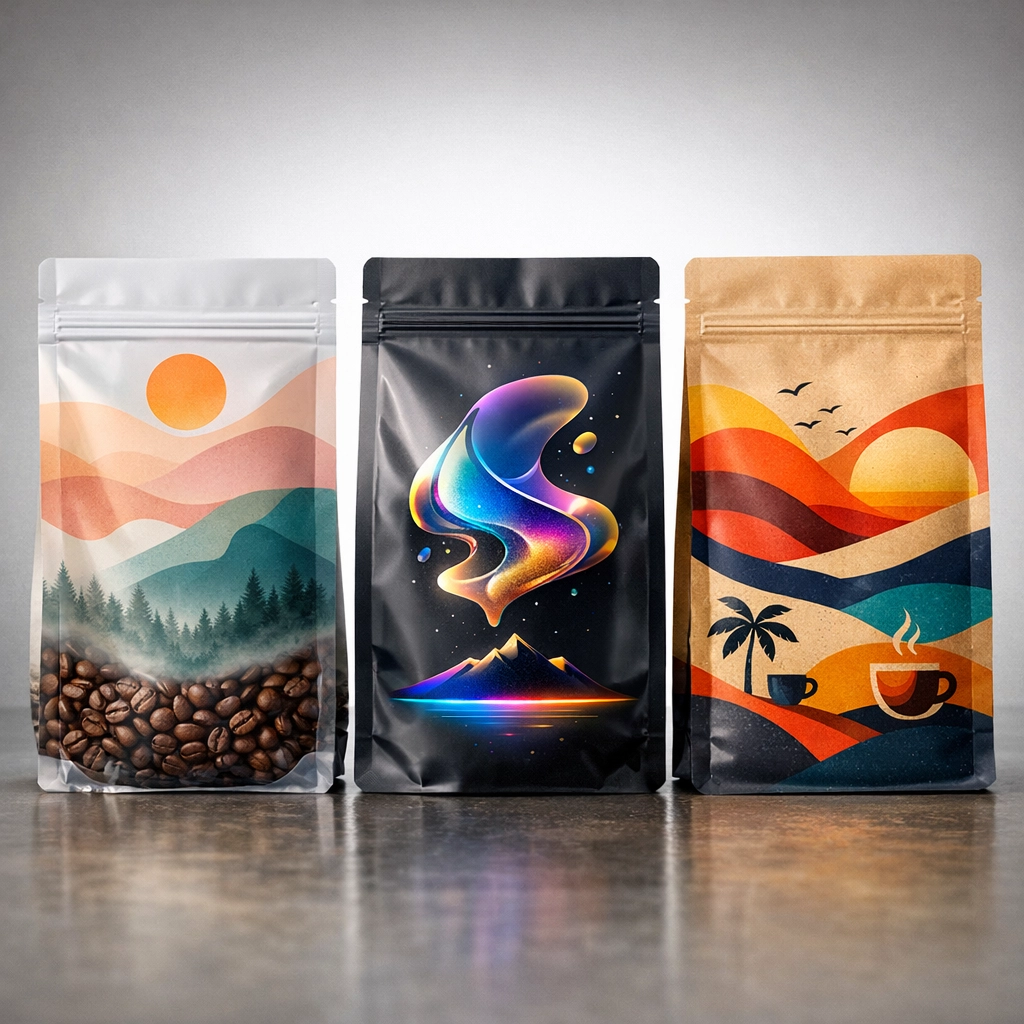
The Top 3 Designs for Coffee Packaging Bags That Increase Sales
For coffee roasteries looking to increase shelf appeal, product freshness, and brand identification, three pouch formats stand out among the various packaging alternatives available today.
1. Flat Bottom Coffee Pouches (Box Pouch)
Because of its distinctive box-shaped design, the pouch can stand firmly upright, offering outstanding shelf stability and optimizing branding area across several panels. Coffee brands can more successfully display logos, product details, and narrative components thanks to this design.
The following are important characteristics of flat bottom coffee bags:
•Freshly roasted beans can release carbon dioxide through a one-way degassing valve.
•After opening, the resealable zipper preserves freshness.
•Five printable panels to improve branding possibilities
•Robust barrier materials that shield against light, moisture, and oxygen
2. Stand-Up Pouches with Valve
Because of their affordability and adaptability, stand-up pouches with degassing valves continue to be one of the most popular coffee packaging formats in the world.
These bags, which are made especially for transporting and storing coffee, combine lightweight, flexible fabrics with practical features. Compared to rigid containers, the stand-up design lowers transportation costs while enabling the pouch to stay upright on shelves.
Important characteristics consist of:
•One-way degassing valve to preserve the freshness of coffee
•Convenient storage with a reusable zipper
•Multi-layer film structures that are flexible and offer superior barrier protection
Stand-up pouch packaging provide the perfect mix of cost, functionality, and aesthetic appeal for a lot of up-and-coming coffee firms.
3.Compostable Coffee Bags
Compostable coffee bag is becoming increasingly popular among environmentally aware firms as sustainability becomes a fundamental value for contemporary customers.
Usually, plant-based or biodegradable films made to decompose under industrial composting conditions are used to make compostable coffee bags. These materials offer the barrier protection required to maintain coffee quality while also lessening the long-term environmental impact.
Compostable coffee packaging have several important features, such as:
•Structures of compostable films
•Eco-friendly printing inks
•Degassing valve compatibility for freshly roasted beans
Coffee roasters may improve their sustainability messaging and comply with new environmental rules by using compostable packaging.
The Impact of Coffee Packaging on Consumer Purchase Decisions'
Packaging has a significant impact on how consumers perceive products and make purchases. Specialty coffee purchasers frequently use package quality as a gauge of product quality, according to insights from the Specialty Coffee Association.
A number of design components have a big impact on purchasing decisions:
1.The psychology of color
While simple black or metallic designs frequently represent premium status, warm tones and earthy colors can convey natural and handcrafted attributes.
2.Tactile experience and texture
A more upscale unboxing experience that upholds brand value is produced via matte finishes, soft-touch coatings, and textured materials.
3.Messages about sustainability
Consumer trust and brand loyalty can be increased by clearly marking packaging materials that are recyclable or biodegradable.
4.Differentiation of shelves
Products stand out in busy retail spaces thanks to their unusual packaging structures, strong graphics, and unique shapes.
When combined, these package elements can greatly raise product exposure and purchase intent while also influencing consumer impression.
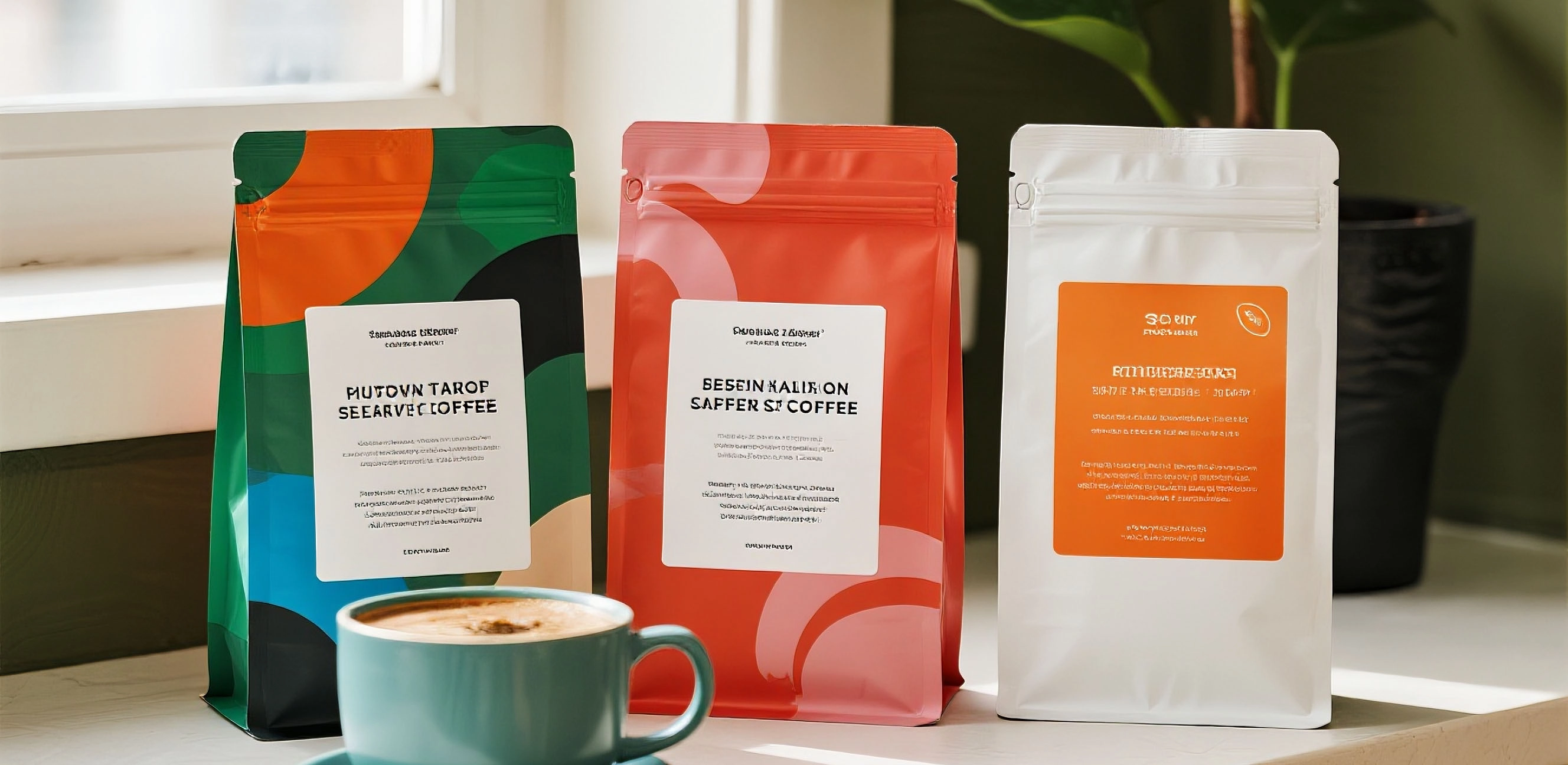
How to Pick the Best Coffee Packaging for Your Company
A number of strategic considerations must be carefully taken into account while choosing coffee packaging.
Important things to think about are:
•Target market: customers of high-end coffee versus those in the mass market
•Product format: custom blends, ground coffee, or whole bean coffee
•Sustainability objectives: packaging materials that can be recycled or composted
•Production volume: roasting in small batches versus large-scale distribution
•Brand identity: eco-friendly placement, high-end look, or simple design
|
Packaging Type |
Best For |
Packaging Type |
|
Flat Bottom Pouch |
Premium brands |
Shelf presence |
|
Stand-Up Pouch |
E-commerce |
Cost efficiency |
|
Compostable Packaging Bag |
Eco brands |
Sustainability |
Upcoming Developments in Coffee Packaging Design
In the future, coffee packaging will develop in tandem with improvements in printing technology and supply chain transparency.
Important new trends consist of:
•Digital printing flexible packaging
Smaller production runs, quicker design modifications, and customized packaging for limited-edition coffee releases are all made possible by digital printing.
•Intelligent packaging technologies
Customers can get information on coffee origin, roasting profiles, and sustainability practices by scanning QR codes on packaging.
•Production of short-term packaging
Flexible packaging options that allow limited-edition or seasonal coffee releases are becoming more and more necessary for specialty roasters.
•Clear message about the supplier chain
Brands are being encouraged to put traceability information directly on packaging as consumers become more interested in learning where their coffee originates from.
Coffee packaging is becoming a potent medium for consumer interaction and brand communication thanks to these advances.
Why Choose RJ PACK for Coffee Packaging Bag?
At RJ PACK, we specialize in high-end, environmentally responsible packaging options for coffee companies looking to differentiate themselves in a congested industry. We can help you turn your packaging from ordinary to exceptional, whether you need recyclable packaging, compostable packaging bag, or custom digital printing.
What We Provide:
•Packaging with custom printing based on the brand identification
•Advance barrier film structures to maintain coffee freshness
•Fast production speeds for big orders
•Adaptable manufacturing for limited-edition custom flexible package printing
Additionally, we can assist companies in creating eco-friendly coffee packaging solutuons that satisfy changing customer demands and legal obligations.
Conclusion
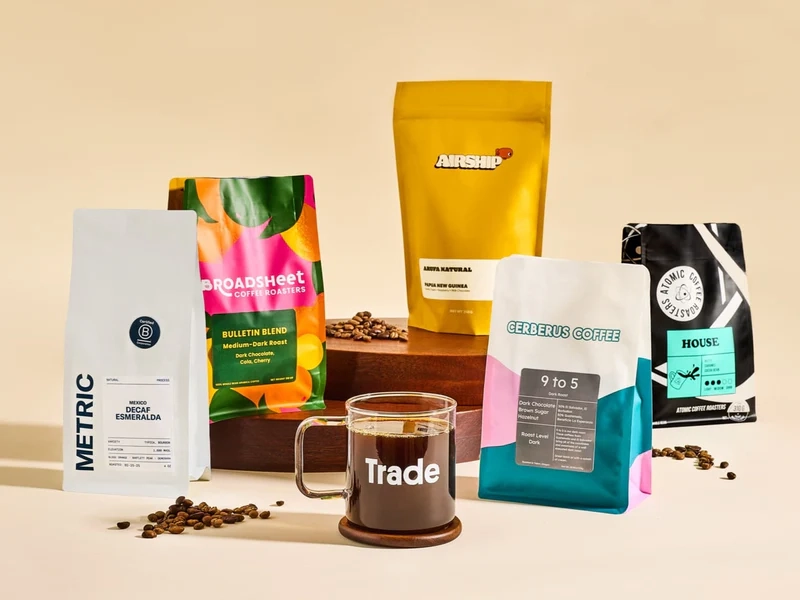
Coffee Packaging is vital in today's cutthroat coffee market because it protects product quality, shapes brand perception, and influences consumer choices.
Flat bottom coffee bags, stand-up pouches with valves, and compostable coffee packaging have been found to be the most successful designs for increasing brand awareness and sales among the various packaging styles available.
Coffee companies that make investments in creative, eco-friendly, and aesthetically pleasing packaging will be better positioned to thrive in the quickly expanding global coffee market as consumer expectations continue to change.